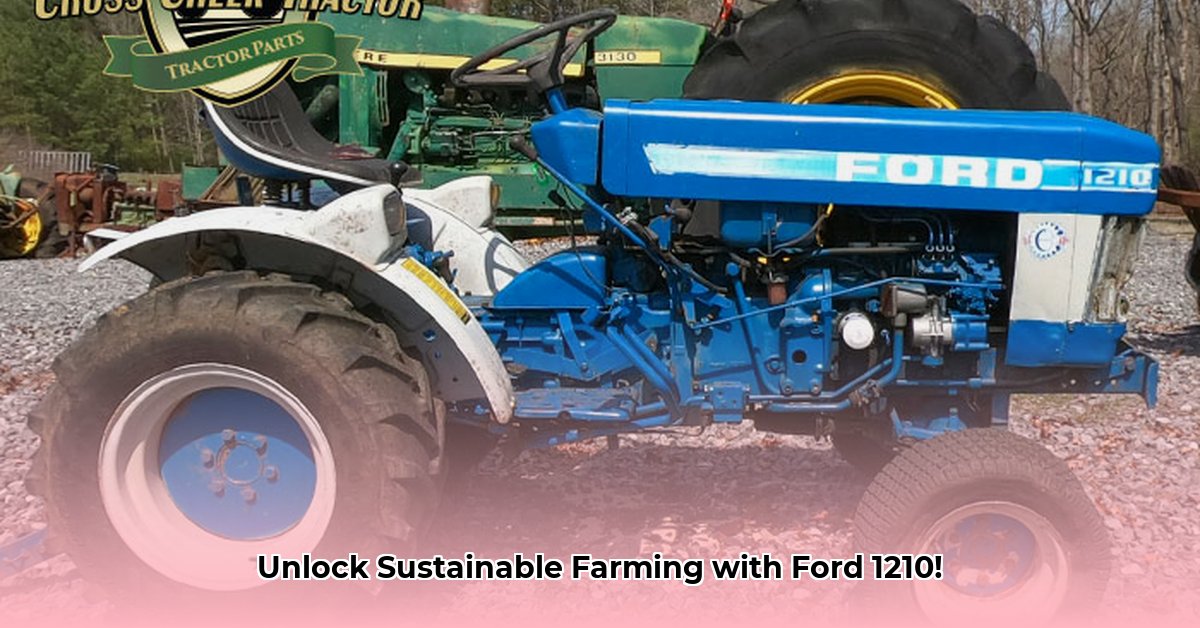
Ford 1210 Tractor: A Sustainable Farming Workhorse?
The Ford 1210, a compact tractor produced from 1983 to 1986, offers a unique perspective on sustainable farming. While modern tractors boast advanced technology, the 1210's simplicity and robust design make it surprisingly relevant for smaller-scale, eco-conscious operations. This article explores its technical specifications, historical context, maintenance needs, and suitability for modern sustainable agriculture. Is this vintage workhorse truly ready for a comeback?
Technical Specifications: A Detailed Comparison
Obtaining consistent specifications for vintage tractors can be challenging. We've compiled data from multiple sources, highlighting discrepancies which may stem from different measurement methods or reporting inconsistencies.
| Feature | Source A (tractordata.com) | Source B (tractor-specs.net) | Notes |
|---|---|---|---|
| Engine Type | 3-Cylinder Shibaura | 3-Cylinder Shibaura | Consistent engine manufacturer. |
| Engine Displacement | 0.9 Liters | 0.9 Liters | Consistent engine size. |
| Rated Power | 16 Horsepower | 16.2 PS (metric horsepower) | Minor difference, likely due to unit conversion. |
| Approximate Weight | 1329-1442 lbs | 1334 lbs | Variation likely due to different configurations. |
| Fuel Tank Capacity | 4.8 gallons | 18 Liters | Roughly equivalent; a unit conversion difference. |
| Hydraulic Capacity | 4.25 gallons | 17-15.5 Liters | Depends on transmission type and year. |
(Image of a Ford 1210 Tractor)
(Diagram highlighting key components: engine, transmission, hydraulic system)
A Trip Down Memory Lane: The Ford 1210 in the 1980s
The Ford 1210 represented a common sight on farms in the 1980s. Its compact size and versatility made it ideal for smaller operations. While lacking the advanced features of modern tractors, its reliable performance made it a popular choice. How does it stack up against modern compact tractors? Modern equivalents boast increased power, improved fuel efficiency, and advanced automation features. However, the 1210's simplicity and sturdy build offer advantages in terms of maintainability and repair.
Restoration and Maintenance: A Guide for Enthusiasts
Restoring a Ford 1210 is a labor of love. Sourcing parts can be challenging, requiring research and networking within the vintage tractor community. Online forums are invaluable resources. Regular maintenance is crucial for longevity.
Common Maintenance Tasks:
- Oil Changes: Essential for engine health; follow manufacturer recommendations.
- Filter Replacements: Air, fuel, and oil filters should be checked and replaced regularly.
- Fluid Levels: Monitor coolant, hydraulic fluid, and transmission fluid.
- Belt Inspections: Regularly check drive belts for wear and tear.
Risk Assessment Matrix:
| Potential Problem | Likelihood | Severity | Mitigation |
|---|---|---|---|
| Engine Trouble | Moderate | High | Regular maintenance, preventative repairs |
| Hydraulic Leaks | Moderate | High | Regular inspections, prompt attention to leaks |
| Transmission Issues | Low | High | Gentle operation, timely fluid changes |
| Electrical Problems | Moderate | Medium | Regular checks of wiring and connections |
Suitability for Sustainable Agriculture: Weighing the Pros and Cons
The Ford 1210's smaller size offers a key advantage in sustainable farming: reduced soil compaction. This is vital for maintaining soil health and minimizing erosion. However, its lower horsepower might limit its use for larger fields or heavy-duty tasks. Fuel efficiency is another crucial factor; older tractors generally consume more fuel per unit of work than their modern counterparts. Considering parts availability and ease of repair are essential for long-term sustainability.
Conclusion: A Niche Role in Modern Agriculture
The Ford 1210 holds a unique position. While not a replacement for modern high-tech tractors, its compact size, simplicity, and potential for restoration offer advantages for smaller-scale, sustainable farms. A careful assessment of your specific needs, considering factors like fuel efficiency, parts availability, and workload, is crucial. With proper care and maintenance, the Ford 1210 can continue to play a role in a more environmentally conscious agricultural landscape. It’s a testament to robust engineering and a potential solution for niche farming applications.